Certification Standards Bridging Automated Spins, Hosted Sessions, and Competitive Wagers in Emerging Markets
Written by Harper Keller · Aug 24, 2026
Certification Standards Bridging Automated Spins, Hosted Sessions, and Competitive Wagers in Emerging Markets
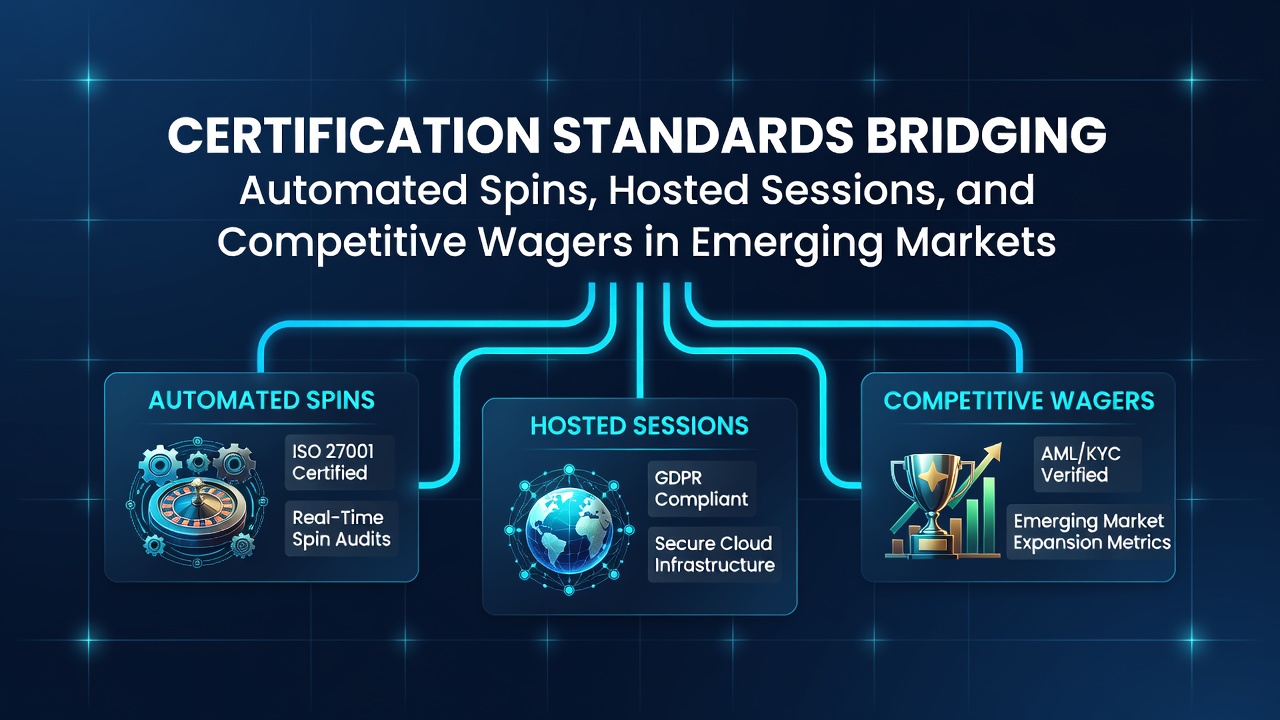
Certification standards have evolved to address the convergence of automated spins, hosted sessions, and competitive wagers as emerging markets expand their regulated frameworks, and these standards now require platforms to demonstrate compliance across multiple product types within single integrated systems. Regulatory bodies in regions such as Latin America and Southeast Asia have updated their evaluation criteria since early 2025 to include cross-format testing protocols that verify seamless transitions between slot mechanics, live dealer streams, adn sports betting interfaces without compromising fairness or security measures.
Expansion of Multi-Format Platforms in New Jurisdictions
Emerging markets including Brazil, Colombia, and parts of India have authorized operators to offer combined gaming products, which has prompted certification agencies to develop unified testing suites that evaluate random number generators for automated spins while simultaneously assessing dealer authentication systems and odds calculation engines for competitive wagers. Data from market analyses released in mid-2026 shows that over 65 percent of newly licensed platforms in these areas incorporate at least two of the three formats, creating demand for certification processes that treat the entire ecosystem as a single interconnected unit rather than isolated components.
Technical Requirements for Integrated Compliance
Certification bodies apply layered evaluation methods that begin with RNG validation for slot outcomes, extend to cryptographic checks on live video feeds and game logic for hosted sessions, and conclude with statistical audits of betting markets to confirm that odds remain consistent during high-volume periods. These procedures incorporate stress testing under simulated peak loads, which reveals whether automated spins continue uninterrupted when users shift to live tables or place event wagers, and the results must meet benchmarks established by international testing laboratories before platforms receive operational approval.
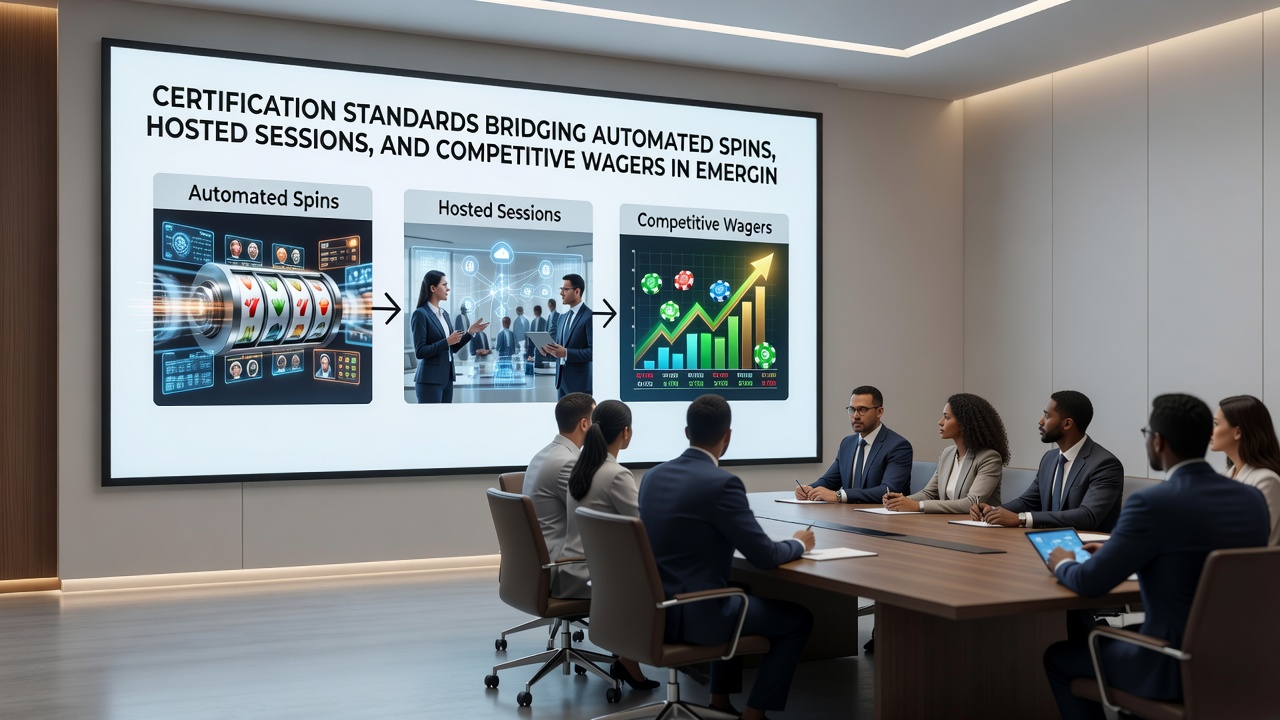
Observers note that standards now mandate audit trails capable of tracking player activity across all three categories, which allows regulators to monitor responsible gaming limits in real time regardless of whether participants engage with reel mechanics, interactive dealer tables, or prediction markets. According to reports from the Asia Pacific Association of Gaming Regulators, several jurisdictions implemented mandatory data-sharing protocols in August 2026 that require certified platforms to transmit unified session logs to central oversight systems.
Regional Variations in Certification Approaches
Countries in Africa and Eastern Europe have adopted modular certification frameworks that permit operators to add new formats incrementally, provided each addition undergoes separate yet compatible evaluation against existing approvals for spins and wagers. This approach reduces approval timelines while maintaining the requirement that hosted sessions integrate with the same player account management systems used for automated and competitive products. Research from the University of Nevada Gaming Research Center indicates that such phased implementations have accelerated market entry for operators in three sub-Saharan nations since late 2025.
Testing laboratories conduct comparative analyses between certified and non-certified platforms to quantify differences in transaction integrity and outcome fairness, and findings consistently show that bridged certification reduces discrepancies in payout reporting across formats. Industry organizations such as the European Gaming and Betting Association have published guidelines that emerging regulators reference when drafting their own cross-product standards, which helps align local requirements with global best practices without direct duplication.
Future Developments and Ongoing Adjustments
Updates scheduled for late 2026 include expanded requirements for artificial intelligence components used in game personalization, which must be certified to operate consistently across spins, live sessions, and wagers without introducing bias or unauthorized data collection. These forthcoming rules build on existing frameworks that already address encryption standards and third-party auditing frequency, ensuring that new technologies integrate without disrupting established compliance pathways.
Conclusion
Certification standards continue to adapt as emerging markets integrate automated spins with hosted sessions and competitive wagers into unified platforms, and the resulting frameworks emphasize technical interoperability, transparent auditing, and regional regulatory alignment. Data released through 2026 demonstrates measurable improvements in cross-format security and player protection where these bridged standards have been applied, which supports further expansion of regulated offerings in additional jurisdictions.